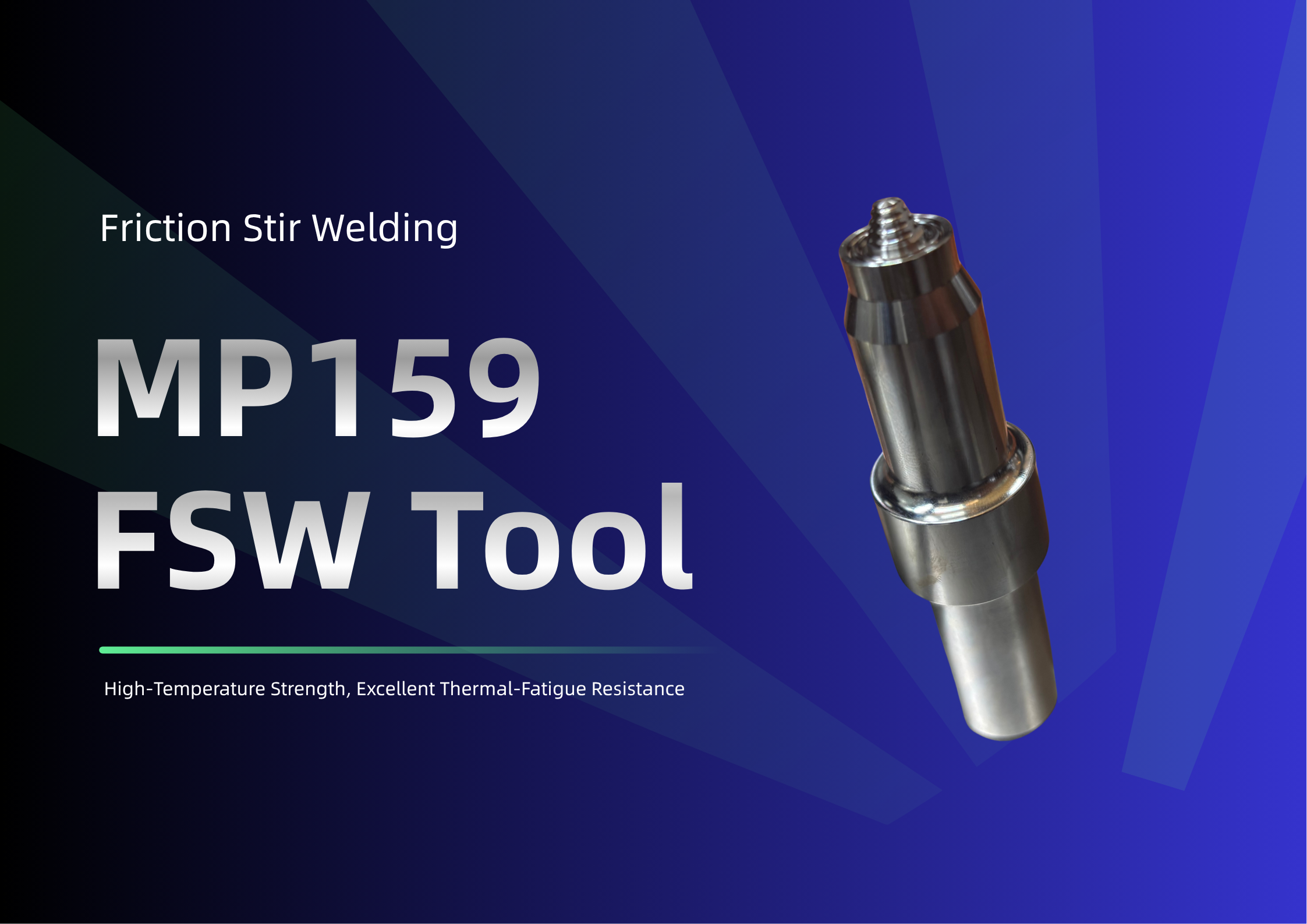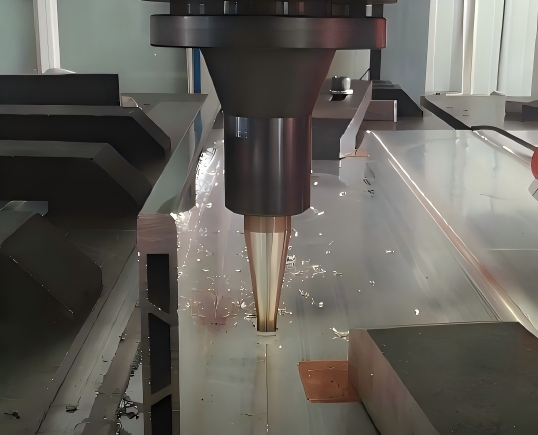
The Friction Stir Welding (FSW) process for extruded aluminum channel liquid cooling plates is an advanced thermal management manufacturing technology that combines the excellent thermal conductivity and extrusion capability of aluminum alloys with the high strength, superior sealing performance, and solid-state joining advantages of FSW.
From a manufacturing perspective, the core concept is to first form the internal cooling channels through aluminum extrusion, and then seal the channels with a cover plate using Friction Stir Welding. This creates an efficient heat-transfer chamber capable of handling pressurized cooling fluids.
While maintaining lightweight construction, this process effectively addresses many limitations of conventional fusion welding and brazing in terms of sealing strength, coolant compatibility, and production consistency. It is widely applicable to applications requiring highly reliable thermal management, including new energy vehicle battery systems, energy storage Power Packs, high-power converters, and industrial laser equipment.
1. Fundamentals of Friction Stir Welding
1.1 Working Principle
Friction Stir Welding is a solid-state joining process in which the base materials do not melt during welding.
Because there is no molten weld pool, typical defects associated with conventional fusion welding, such as porosity, solidification cracking, slag inclusions, and chemical segregation caused by solidification, can be significantly reduced or avoided.
This is particularly important for liquid cooling plates. During long-term operation, the cooling plate may be exposed to internal coolant pressure, pressure cycling, and external mechanical vibration. The welded joint must therefore maintain excellent structural integrity and leak-tightness throughout its service life.
The solid-state nature of FSW provides an effective solution for achieving reliable and durable channel sealing.
1.2 Key Technical Advantages
High joint strength and excellent mechanical performance
Because the base material is not melted during FSW, the welded joint maintains a dense metallurgical structure without solidification-related defects. At the same time, the mechanical stirring action of the FSW tool refines the grain structure within the weld zone, contributing to excellent tensile and fatigue performance.
Low welding distortion and high dimensional accuracy
For liquid cooling plates, dimensional accuracy, flatness, and channel geometry directly affect the contact area between the cooling plate and the heat-generating component. Better contact generally means lower thermal resistance and more efficient heat transfer.
FSW generates significantly lower thermal input than conventional fusion welding. As a result, the workpiece experiences much less thermal expansion and contraction, helping minimize welding distortion and maintain dimensional accuracy.
Excellent weld integrity and sealing reliability
Leakage is one of the most critical failure modes of liquid cooling plates. Even very small defects can potentially develop into leakage paths under long-term pressure cycling.
FSW produces a dense solid-state joint with excellent sealing performance, making it highly suitable for cooling plates operating under demanding pressure and reliability requirements.
Clean and environmentally friendly process
Unlike brazing and conventional fusion welding, FSW generally does not require filler metal or shielding gas during the welding process.
This can reduce consumable costs and, more importantly, eliminate potential contamination associated with filler materials or shielding gas. It also provides a cleaner manufacturing process.
2. Structure and Process Compatibility of Extruded Aluminum Channel Cold Plates
A liquid cold plate is a key functional component of a liquid cooling system. The method used to manufacture the internal cooling channels is therefore an important factor in determining the subsequent joining process.
Aluminum extrusion is one of the most widely used methods for producing the basic channel structure of liquid cooling plates.
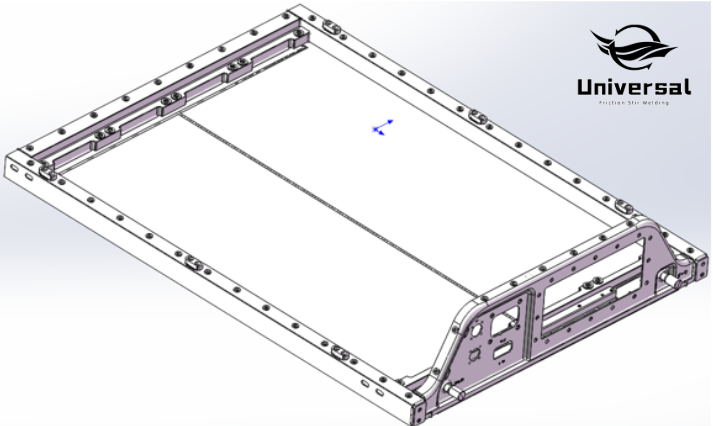
From a structural perspective, this type of cooling plate typically consists of a:
Base Plate + Cover Plate
The combination of an extruded channel base plate and an FSW-sealed cover plate provides significant technical and economic advantages.
On the one hand, aluminum extrusion offers relatively high material utilization, low forming costs, and good manufacturing flexibility.
On the other hand, extrusion provides good dimensional consistency and enables the base plate to maintain accurate and parallel surfaces, providing a reliable reference for subsequent machining and assembly.
The combination of extrusion and FSW therefore creates a highly efficient manufacturing solution:
Extrusion → Low-cost channel formation
FSW → High-reliability channel sealing
The two processes complement each other and together form a mature and cost-effective manufacturing solution for aluminum liquid cooling plates.
3. Manufacturing Process of Extruded Channel Liquid Cold Plates
From a production perspective, the key value of this process lies in its ability to integrate upstream and downstream operations into a standardized manufacturing chain.
The overall process can be divided into four major stages, covering the complete production route from extruded material to finished cooling plate.
3.1 Upstream Process: Channel Formation and Pre-Weld Preparation
Channel Formation and Machining
The first step is to produce an aluminum extrusion with an open channel structure.
The extruded base plate is then precisely machined by CNC according to the designed cooling-channel layout. This includes machining the channel connections and circulation paths, as well as finishing the reference and mating surfaces required for welding.
Precision Assembly and Positioning of the Cover Plate
Assembly accuracy has a direct influence on the material flow and joint formation during FSW.
The gap between the cover plate and the base plate must therefore be carefully controlled. Excessive or uneven gaps can affect material containment and material flow during welding, potentially resulting in insufficient filling, internal voids, or inconsistent weld penetration.
For production applications, the actual allowable assembly gap should be established according to the cooling plate design, joint configuration, material, and validated welding procedure.
Cleaning of the Welding Surfaces
Before welding, the areas around both sides of the weld joint must be thoroughly cleaned.
Oil, oxide layers, machining coolant, chips, and other contaminants should be removed from the welding surfaces.
Effective surface preparation helps prevent contamination-related defects and improves weld consistency, sealing performance, and mechanical properties.
3.2 Core Process: Friction Stir Welding
FSW Welding
Before production welding, the appropriate FSW tool material and geometry must be selected according to the aluminum alloy, material thickness, joint configuration, and weld design.
The welding program is then prepared and loaded into the FSW machine.
Key process parameters typically include:
- Tool rotational speed
- Welding/travel speed
- Axial force or plunge depth
- Tool tilt angle
- Welding trajectory
- Tool penetration depth
- Start and end conditions
During welding, the rotating tool generates frictional heat and mechanically stirs the softened material along the joint line.
The material remains in a plasticized solid state rather than forming a conventional molten weld pool. Under the combined effects of frictional heating, tool rotation, and forging pressure, the material flows around the tool and consolidates behind it to form a continuous and sealed joint.
For liquid cold plates, stable material flow and sufficient forging pressure are particularly important for achieving a defect-free and leak-tight joint.
3.3 Downstream Process: Post-Weld Treatment and Finishing
Weld Area Finishing
After FSW, excess material, flash, burrs, and other material generated around the shoulder contact area may need to be removed.
The welded surface can then be machined or finished according to the final dimensional and surface requirements of the cooling plate.
Internal Channel Cleaning
After welding and machining, the internal cooling channels must be thoroughly cleaned.
Dedicated cleaning equipment can be used for high-pressure flushing, air blowing, or other appropriate cleaning methods to remove machining chips, aluminum particles, and other contaminants.
After cleaning, visual inspection using an endoscope or other suitable inspection method can be performed to verify that the internal channels are clean and free from obvious damage or foreign material.
Weld Surface Treatment
Depending on the application and environmental requirements, additional surface treatment may be applied to the cooling plate.
Possible treatments include:
- Anodizing
- Conductive conversion coating
- Corrosion protection
- Internal channel surface treatment
The selected treatment should be compatible with the aluminum alloy, coolant, operating environment, and overall thermal management system.
3.4 Final Inspection
Weld Appearance and Dimensional Inspection
The weld surface should undergo visual inspection to verify that there are no visible cracks, abnormal surface defects, excessive flash, or other unacceptable conditions.
Critical dimensions of the cooling plate should also be measured to ensure compliance with the engineering drawings and production specifications.
Typical dimensional inspections may include:
- Overall dimensions
- Flatness
- Weld position
- Channel dimensions
- Port dimensions
- Mounting-hole position
- Cover plate geometry
Non-Destructive Testing
After visual and dimensional inspection, appropriate non-destructive testing methods can be applied to verify internal weld quality.
Depending on the product design and quality requirements, inspection methods may include:
- X-ray inspection
- CT inspection
- Ultrasonic testing
- Other qualified NDT methods
The inspection method and acceptance criteria should be defined according to the customer's technical specifications and the validated production process.
Cooling Plate Performance Testing
Performance testing is the final and critical quality-control stage before shipment.
Each cooling plate should undergo the required performance tests according to the product specification.
Typical tests may include:
- Pressure testing
- Leak testing
- Flow-rate testing
- Dimensional inspection
- Thermal performance testing
- Internal channel inspection
Only products that meet the specified quality and performance requirements should be released for shipment.
4. Applications of Extruded Channel Liquid Cooling Plates
The main applications of this technology are industries where high thermal management reliability is critical.
New Energy Vehicles
The new energy vehicle industry is one of the major application markets for liquid cooling plates.
Typical applications include:
- EV battery packs
- Battery modules
- Motor controllers
- IGBT power modules
- Power electronics
Liquid cooling plates provide efficient heat transfer while maintaining a lightweight and compact structure.
Energy Storage
Energy storage is one of the fastest-growing application areas for liquid cooling technology.
Typical applications include:
- Energy Storage Power Packs
- Battery Energy Storage Systems (BESS)
- Power Conversion Systems (PCS)
- Energy storage converters
These cooling plates may experience pressure fluctuations, thermal cycling, vibration, and long operating periods. Therefore, weld sealing reliability and long-term structural integrity are critical.
Power Electronics
Liquid cooling plates are also widely used in high-power electrical and electronic equipment.
Typical applications include:
- Wind power converters
- Solar PV inverters
- High-power frequency converters
- Industrial laser systems
- Railway traction systems
- High-power semiconductor equipment
These applications require efficient heat dissipation, compact design, high sealing reliability, and stable long-term operation.
5. Conclusion
The Friction Stir Welding process for extruded aluminum channel liquid cooling plates is a mature and highly effective manufacturing solution that combines the advantages of aluminum extrusion with the high-strength and high-reliability joining capabilities of FSW.
The combination of:
Aluminum Extrusion + CNC Machining + Precision Assembly + FSW + Cleaning + Inspection
provides an efficient manufacturing route for producing lightweight, high-performance liquid cooling plates.
By combining low-cost channel formation through extrusion with reliable channel sealing through FSW, this process can deliver excellent dimensional consistency, structural integrity, and leak-tightness.
It is particularly well suited to liquid cooling applications requiring high reliability under pressure, vibration, thermal cycling, and long-term continuous operation, including new energy vehicles, energy storage, power electronics, industrial laser systems, and other high-power thermal management applications.