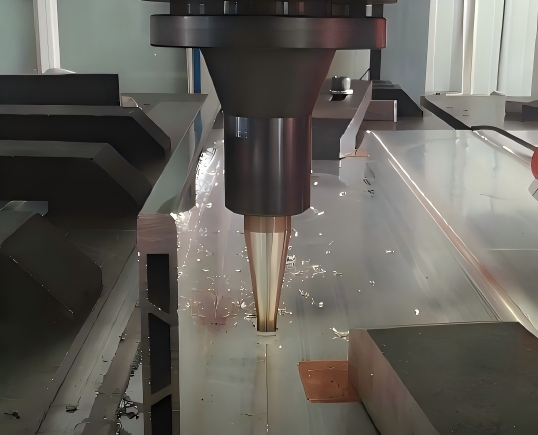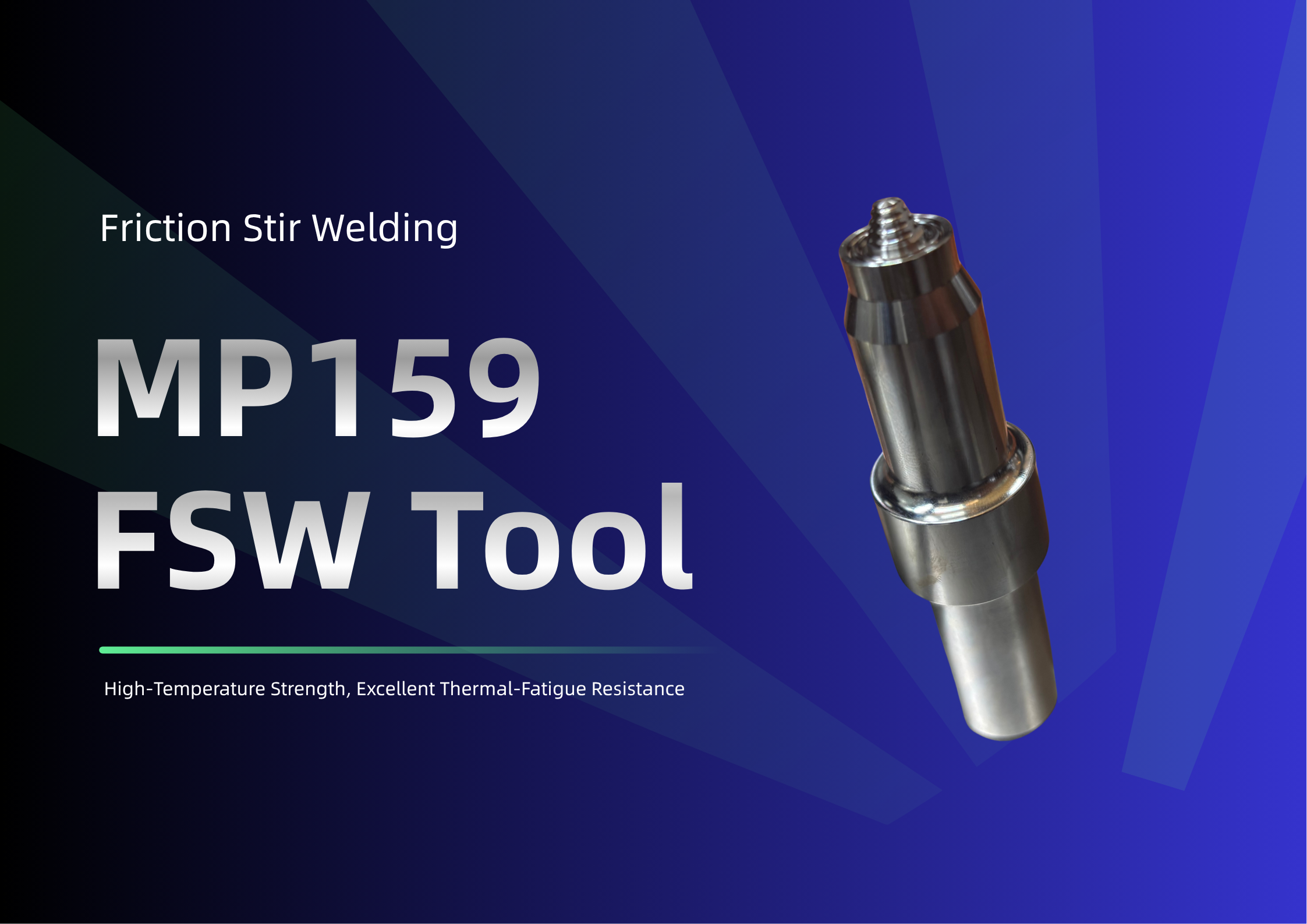
The FSW tool is one of the most critical consumable components in the Friction Stir Welding process. Its material properties directly affect weld quality, production efficiency, tool life, and overall operating cost.
Among the major FSW tool materials currently available, MP159 is a Co-Ni-Cr-Mo multi-phase precipitation-hardening superalloy. With an excellent balance of high-temperature strength and toughness, MP159 fills the performance and cost gap between conventional hot-work tool steels and ultra-hard materials. It is therefore one of the preferred materials for high-reliability FSW tools used under medium- to high-temperature welding conditions.
1. Material Background and Key Properties
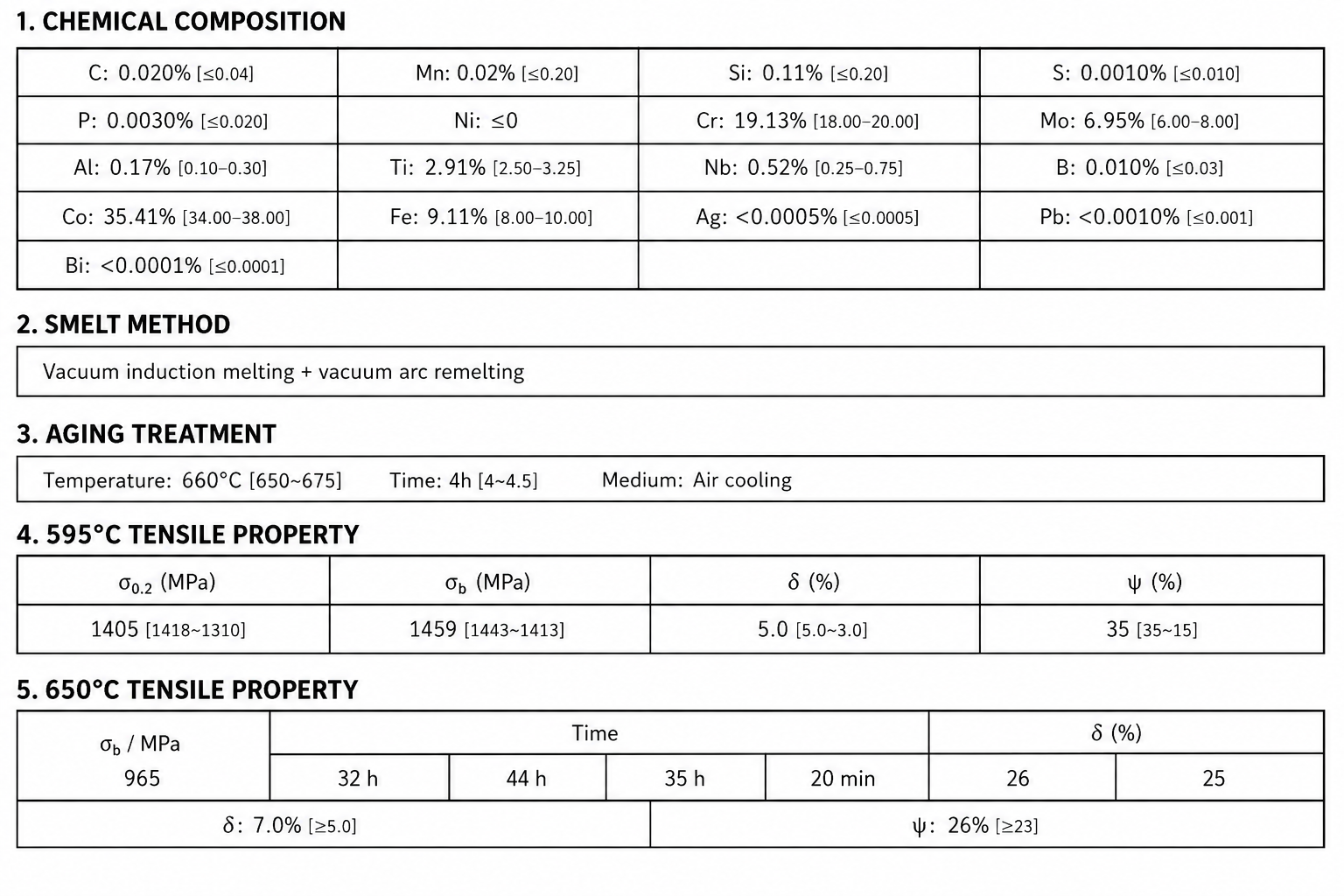
Heat Treatment
Temperature: 660°C
Holding Time: 4 hours
Cooling: Air cooling
Mechanical Properties
Room-Temperature Tensile Properties
0.2% Proof Stress: 1,850–1,853 MPa
Ultimate Tensile Strength: 1,876–1,887 MPa
Elongation: 8.0–8.5%
Tensile Properties at 595°C:
0.2% Proof Stress: 1,405–1,418 MPa
Ultimate Tensile Strength: 1,443–1,459 MPa
Elongation: 5.0%
Endurance Properties at 650°C:
Stress: 965 MPa
Endurance Time: 32 h 44 min – 35 h 20 min
Elongation: 7.0–8.0%
Why Choose MP159? — Key Material Properties
MP159 was originally developed for high-temperature fasteners used in aircraft engines. Due to its excellent high-temperature load-bearing capacity and fatigue resistance, it has also become an important material for FSW tool manufacturing.
Exceptional High-Temperature Strength
MP159 offers outstanding mechanical strength and hardness. It not only provides extremely high tensile and yield strength at room temperature, but also maintains excellent strength and hardness under the severe operating conditions of FSW.
During Friction Stir Welding, frictional heat can cause tool temperatures to reach approximately 600–800°C in demanding applications. MP159 maintains excellent mechanical stability at elevated temperatures, helping prevent plastic deformation of the stir pin and shoulder and maintaining consistent tool geometry throughout the welding process.
Excellent Thermal-Fatigue Resistance
FSW involves rapid heating during welding followed by rapid cooling after the tool passes. This repeated thermal cycling places significant thermal stress on the tool.
The multi-phase alloy structure of MP159 provides excellent resistance to thermal fatigue, helping minimize the formation and propagation of surface microcracks caused by repeated heating and cooling.
This significantly reduces the risk of premature tool failure caused by thermal fatigue and helps maintain stable tool performance during long-term operation.
Low Adhesion to Workpiece Materials
MP159 has relatively low metallurgical affinity with active workpiece materials such as aluminum and titanium alloys.
This helps reduce material adhesion to the tool surface during welding, minimizing material pickup and tool sticking. It also helps control flash formation and maintain a cleaner, smoother weld surface, potentially reducing the need for subsequent grinding or finishing operations.
Key Advantages of Our MP159 FSW Tools
A cost-effective FSW tooling solution designed to improve productivity, consistency, and overall welding efficiency.
Extended Tool Life — Lower Cost per Meter of Weld
Compared with conventional FSW tools, MP159 tools can provide significantly improved wear resistance and longer effective welding life.
Although the initial purchase price of an MP159 tool may be higher, its total effective welding distance can be several times greater than that of conventional tooling under suitable conditions.
When the tool cost is calculated based on the cost per meter of weld, the overall tooling cost can be significantly reduced.
Longer tool life also means fewer tool replacements, lower purchasing frequency, and reduced inventory requirements for spare tools.
Excellent Dimensional Stability — Consistent Weld Quality in Mass Production
In automated and high-volume production, conventional FSW tools gradually wear during operation. As the pin becomes shorter and the shoulder geometry changes, heat generation, material flow, and penetration depth may gradually change.
MP159's excellent wear resistance helps maintain the pin length, shoulder geometry, and tool profile for a longer period.
This provides more stable welding conditions and helps improve weld-to-weld consistency and production yield, making MP159 particularly suitable for automated mass-production applications.
High Strength and Toughness — Reduced Risk of Pin Breakage
During thick-section and deep-penetration welding, or when high forging forces are applied, the root of the stir pin is subjected to significant transverse shear and cyclic mechanical stresses.
MP159 combines high hardness, high strength, and excellent toughness, allowing the tool to withstand demanding mechanical loads and repeated cyclic stresses.
This significantly reduces the risk of sudden pin fracture during welding. By minimizing the possibility of a broken pin remaining inside the weld, MP159 can help prevent expensive workpiece scrap, unexpected tool replacement, and unplanned production downtime.
2. Main Applications and Base-Material Compatibility
MP159 FSW tools are mainly used in medium- to high-temperature welding applications where excellent tool toughness and fatigue resistance are required. Key applications include the following.
2.1 High-Strength Aluminum Alloy Welding
MP159 is one of the preferred tool materials for welding thick sections of 7xxx-series high-strength aluminum alloys, such as 7075 and 7050.
During the welding of high-strength aluminum plates, MP159 provides excellent fatigue resistance against pin breakage and can support long, continuous welds with a low risk of sudden tool failure. This significantly reduces the risk of workpiece scrap caused by unexpected tool breakage.
2.2 Stainless Steel and Low-Carbon Steel Thin- and Medium-Thickness Welding
MP159 tools can be used for welding 304/316 stainless steel and low-carbon steel, particularly for plate thicknesses up to approximately 6 mm.
Compared with relatively brittle PCBN tools, MP159 offers better toughness and impact resistance. It is especially suitable for small-batch, multi-product, and non-standard welding applications where eccentric loading or intermittent impact may occur.
The cost of an MP159 tool set is also significantly lower than that of a PCBN solution, providing better overall cost-effectiveness in many applications.
2.3 Titanium Alloys and Special FSW Processes
MP159 can be used for FSW of thin sheets made from commercially pure titanium and titanium alloys such as TC4 (Ti-6Al-4V). With appropriate control of heat input and process parameters, high-quality, defect-free joints can be achieved.
MP159 is also suitable for special FSW processes, including:
- Stationary Shoulder Friction Stir Welding (SSFSW)
- Refill Friction Stir Spot Welding (RFSSW)
- Other specialized FSW processes
3. Typical Tool Design Solutions
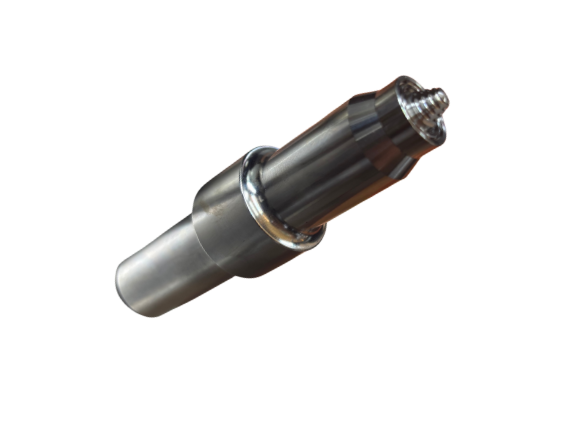
The structural design of MP159 FSW tools follows the general principles of FSW tooling while taking advantage of the material's specific properties.
3.1 One-Piece vs. Split Tool Design
One-piece design
The shoulder and pin are machined as a single component.
Advantages include:
- High structural rigidity
- Simple manufacturing process
- Good suitability for thin-sheet welding
- Suitable for conventional rotating-shoulder FSW
The main disadvantage is that the entire tool must normally be replaced when the pin or shoulder reaches its wear limit, resulting in higher material consumption and operating cost.
Split-tool design
In a split-tool configuration, the pin is manufactured from MP159, while the shoulder is made from a lower-cost material such as H13 steel. The pin and shoulder can be connected using a threaded connection or shrink-fit assembly.
The main advantage is that the worn pin can be replaced independently, significantly reducing long-term consumable costs. This configuration has become one of the most common solutions for industrial FSW applications.
3.2 Pin and Shoulder Geometry
A tapered, threaded pin is one of the most common FSW tool designs. Typical taper ratios range from approximately 1:10 to 1:5, with 1–3 thread starts machined on the pin surface.
The threaded geometry promotes vertical material flow and helps reduce the risk of tunnel and void defects.
For highly plastic materials or high welding speeds, multi-flat pin designs, such as triangular or square pins, can be used to improve material shearing and mixing, thereby enhancing microstructural uniformity in the weld nugget zone.
In terms of dimensional proportions, the pin root diameter is typically approximately one-third of the shoulder diameter. The pin length is normally slightly shorter than the workpiece thickness, leaving approximately 0.1–0.3 mm of controlled plunge allowance.
For rotating-shoulder applications, the shoulder face is commonly designed with a concave angle of approximately 3–7°. This helps contain the plasticized material and reduce flash formation.
In stationary-shoulder FSW, MP159 is used only for the rotating pin, while the stationary shoulder is manufactured from high-temperature steel or a hard material. This configuration can produce a smoother weld surface with minimal flash.
4. Wear Mechanisms and Reference Tool Life
The primary failure mechanisms of MP159 FSW tools are abrasive wear and thermal fatigue.
Unlike hard and brittle tool materials that may fail through sudden fracture, MP159 generally exhibits a more gradual wear process, making tool replacement easier to predict and manage.
Typical failure modes include:
- Pin-tip abrasive wear: gradual reduction of pin length, which may eventually result in insufficient penetration and incomplete bonding at the root of the weld.
- Pin-root fatigue fracture: fatigue failure caused by cyclic thermal and mechanical stresses at elevated temperatures.
- Shoulder-face wear: continuous friction and wear on the rotating shoulder surface, gradually reducing its forging capability.
5. Tool Life Extension and Repair Technologies
5.1 Laser Metal Deposition Repair
For worn MP159 FSW tools, Laser Metal Deposition (LMD) can be used as an effective repair method.
Cobalt-based alloy powder can be used as the deposition material. Combined with controlled interlayer cooling, LMD can restore the worn tool geometry with high dimensional accuracy.
The deposited layer forms a strong metallurgical bond with the MP159 substrate while maintaining a relatively small heat-affected zone. As a result, the reduction in base-material properties can be minimized.
After repair, tool life can potentially be restored to more than 70% of that of a new tool, while the repair cost may be approximately 30–40% of the cost of a new tool. This can significantly reduce long-term FSW consumable costs.
5.2 Other Tool Life Extension Methods
Surface coatings
Hard coatings such as TiN and TiAlN can be deposited using PVD technology to reduce abrasive wear and potentially increase tool life by approximately 15–30%, depending on the application.
Process optimization
Proper matching of tool rotational speed and welding speed, together with effective control of peak welding temperature, can reduce thermal fatigue, high-temperature softening, and accelerated tool wear.
Cooling assistance
Back-side water cooling or inert-gas cooling can be introduced to reduce the operating temperature of the tool and help extend its thermal-fatigue life.
Key Application Industries
Conclusion
MP159 provides a strong balance between high-temperature strength, toughness, fatigue resistance, wear resistance, and cost.
Compared with brittle ultra-hard materials such as PCBN and WC-Co, MP159 offers greater resistance to impact and sudden fracture. Compared with conventional hot-work tool steels such as H13, it provides substantially better high-temperature mechanical performance.
For high-strength aluminum alloys, stainless steel, titanium alloys, and specialized FSW processes, MP159 can provide a reliable tooling solution, particularly when tool toughness and resistance to thermal fatigue are critical requirements.
For industrial applications, the selection of MP159 tool geometry, material condition, shoulder design, cooling strategy, and welding parameters should be optimized together according to the specific base material, plate thickness, welding speed, rotational speed, machine rigidity, and expected tool life.